Didactic: IPE Core Sessions
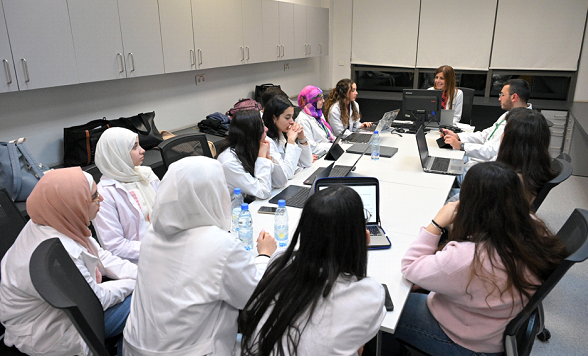
The Lebanese American University Interprofessional Education (LAU IPE) core sessions consist of three, 2-hour mandatory, extracurricular and longitudinal workshops offered throughout the curriculum of health and social care students (i.e. pharmacy, medicine, nursing, nutrition and social work). The series is equivalent to 15 contact hours, and delivered over two or three years, depending on the profession. Students from different professions are grouped together by program level based on their amount of clinical experience and familiarity with interdisciplinary practice. Core 1 includes students who have not yet had any clinical learning experience regardless of their class year. Core 2 and 3 includes students who are enrolled in clinical experience. All core sessions follow the same model: students will have to prepare for each session by watching prerecorded videos. The sessions will then be given online by a facilitator (around 30 per group). The students will then be subdivided in small mixed groups and given a case to solve using the tools given in the videos. This design has been chosen to increase the interaction in between students from different schools and trigger communication and problem solving.
- IPE 200: Introduction and Communication Tools
- IPE 300: Teamwork and Conflict Management
- IPE 400: Ethics in an Interprofessional Approach
What is Intra-professional Education?
Intra-professional education occurs when members of the same profession learn about, from and with each other to develop cohesive practices that improve medicine, nursing, nutrition and pharmacy care.
What is Interprofessional Education?
Inter-professional education “occurs when students from two or more professions learn about, from, and with each other” (WHO, 2010, Framework for action on Interprofessional Education & Collaborative Care) to develop cohesive practices that improve health care and social well-being.
Inter-professional and intra-professional go hand in hand to optimize patient care and build collaborative practice to improve the healthcare of society.
Student Learning Outcomes
Graduates of LAU’s health and nutrition care programs should be able to: